 We can learn just about anything in life if we will simply read and then reflect on what we have read (Warren Bennis).
Several years ago I was teaching the Lead Well workshop to a group of executives. In one of the sessions I casually asked, “How many of you have read Stephen Covey’s book The Seven Habits of Highly Effective People?” Just about everyone had. I then asked, “Which of the seven habits did you best connect with?” No one responded. I gently prompted them on some of the habits (start with the end in mind; be proactive; put first things first) but blank stares and silence filled the room. Reading Covey’s great book had no lasting value for these executives because they had not retained what they read.
Because of that encounter, I formalized my approach to reading with the intent to learn.
In last week’s post, I listed the books I read in 2019. Here’s how I processed each one so as to maximize learning. Let’s begin with a reminder of the importance of reading.
1. Read.
“He who does not read is no better off than those who cannot read.” – Mark Twain
“Those who do read are better off than those who can read but do not.” – Don McMinn
Make reading a regular part of your weekly routine. Some people read daily, others read for longer periods of time on the weekend. Make reading a priority, otherwise you won’t do it.
There’s a difference between reading for entertainment and pleasure and reading to learn. I read the daily newspaper to relax and catch up on the news, but I don’t read it to learn. I read a few novels every year but I don’t anticipate that I’m going to learn a lot; I read them for pleasure.
Determine that you are going to read with the intent to learn.
Identify written material that you can learn from. Don’t underestimate how hard this can be; a lot of printed material is intellectual cotton candy. Here are some sources for finding good material:
- Get recommendations from friends who enjoy reading good material.
- Read book reviews (the Sunday New York Times has an entire section on book reviews).
- Identify periodicals that feed your mind. I enjoy National Geographic, Smithsonian, The Atlantic.
- Discover what type of book works for you. For instance, I do not enjoy reading a large book on a single subject; I just don’t have the interest or the patience. I’m a generalist so I would rather read three shorter books about three different topics than one long book about one.
Discover your personal reading preferences.
2. Develop a process that will help you retain what you read. Read and mark.
I’ve developed the following system that works for me. Use it as a general template and craft your own system.
- Before you start reading, take a few minutes to anticipate what you hope to learn. What is the topic? Why have you chosen this book or periodical? Who is the author? Why should you spend time reading this material? How might it impact your life? Study the table of contents to get an overview of the book.
- Read the book with pen in hand. When you read something that speaks to you, circle or underline it and then make marks in the upper/outside corner of the page (one mark means “this is good”; two marks mean “this is really good”; three marks mean “this is outstanding.”) Also, in the margins, write key words or thoughts.
- Each person has his own reading/attention-span. Read until your mind begins to drift and then set the book aside, or switch to another book. I normally focus on three books at a time. I’ll read one for 20 minutes, then switch to another for 20 minutes. With practice, you can increase your ability to concentrate while reading.
- Quickly find links between what you read and real life. How can the thoughts espoused in the book be lived out in real life? If often helps to share with others what you have learned.
- When you finish reading the book, put it aside for several weeks.
3. Journal key thoughts.
Re-read the book, focusing on those areas that you marked. This should take about 1/5 the amount of time it took you to read it the first time. Record in your thought-journal, significant thoughts and passages from the book. Formerly, I wrote in a nice leather journal. Now, I use the Evernote app because the files are always with me and it has a search function.
Periodically, re-read your journal entries and highlight salient thoughts, particularly those you want to memorize.
4. Memorize key thoughts.
Knowledge without memory is useless so it’s helpful to memorize key thoughts and concepts. When committed to memory, thoughts will continue to grow, mature, and become clear.
For instance, years ago I memorized a significant thought proffered by F. Scott Fitzgerald, “The test of a first-rate intelligence is the ability to hold two opposed ideas in your mind at the same time and still retain the ability to function.” When I first memorized the sentence I wasn’t sure what it meant, but it lingered in my mind for years and one day it came alive. Now it gives me solace and peace of mind.
So, as you re-read your journal entries, identify what you want to memorize. Develop a memorization system that works for you. Some people use index cards, I use Evernote.
The key to memorization is repetition and review.
5. Apply knowledge to life.
Finally, bridge the knowing-doing gap because knowledge without application is minimally useful.
Authors Pffeffer and Sutton wrote a terrific book titled The Knowing-Doing Gap: How Smart Companies Turn Knowledge Into Action (2000). It’s a great read that exposes a conundrum we all face: why is it so difficult to do what we know we should do? Why do we know but we do not do?
In 2020, read more and process what you read.

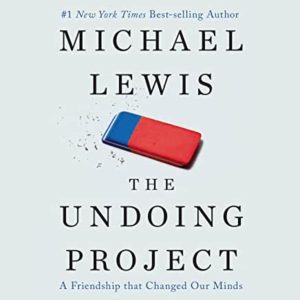 Book – The Undoing Project by Michael Lewis. Forty years ago, Israeli psychologists Daniel Kahneman and Amos Tversky wrote a series of breathtakingly original papers that invented the field of behavioral economics. They had one of the greatest partnerships in the history of science. In The Undoing Project, Lewis shows how their Nobel Prize–winning theory of the mind altered our perception of reality. The last page made me weep.
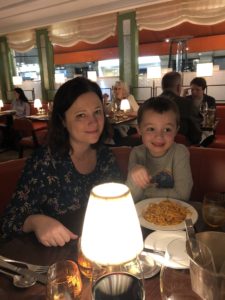 – In December I took my family on our 6th consecutive transatlantic
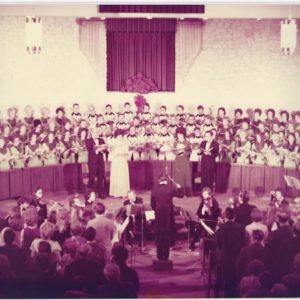 nce of the Messiah at my church in Austin, Texas. Here are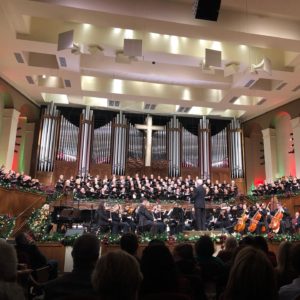
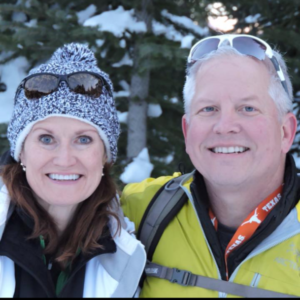 ears. They are realtors in the Dallas metroplex. Last year they went the second mile in helping us negotiate a difficult real estate deal. Thanks, Scott and Barbara. If you need a realtor in the DFW area, they are among the best (barbarascribner@kw.com).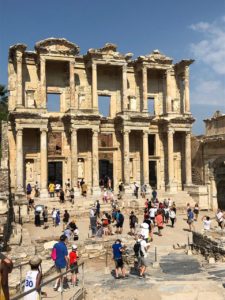
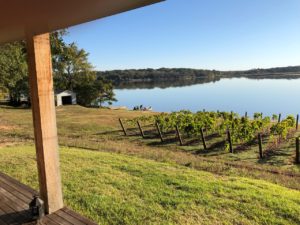 Hobby update – In spring 2017 I planted a small vineyard in East Texas. I’m growing Tempranillo, Blanc-du-Bois and Black Spanish grapes. The first two years, the fruit is cut off to channel all energy to the root-system. In July 2020 I’ll be crushing grapes.
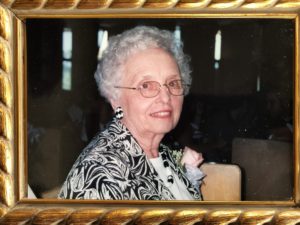 In memoriam – The day after Thanksgiving, Grams passed from this life to the next. Mary’s mother was 95-years old.
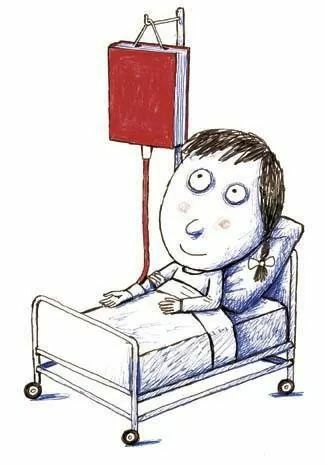 The joy and benefit of reading cannot be overestimated. It’s the best way to grow intellectually and stay mentally viable. All it takes is time, and it’s time well spent.