
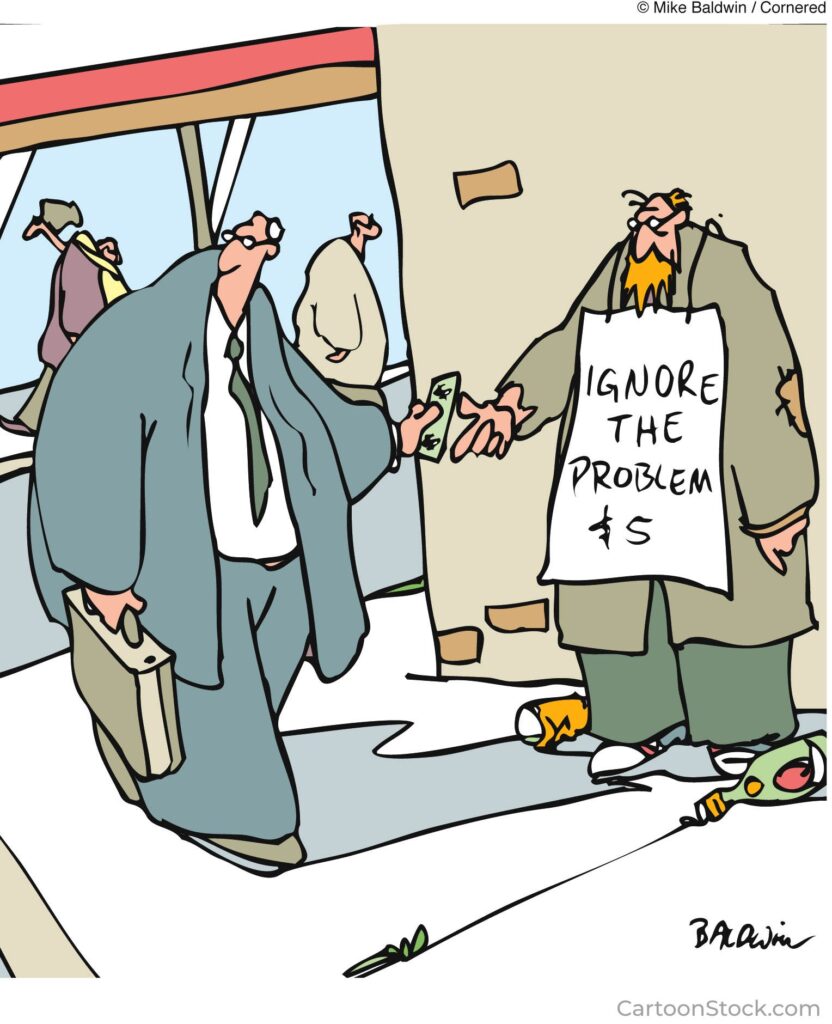
“In every good marriage, it helps sometimes to be a little deaf. I have followed that advice assiduously, and not only at home through 56 years of a marital partnership nonpareil. I have employed it as well in every workplace, including the Supreme Court. When a thoughtless or unkind word is spoken, best tune out. Reacting in anger or annoyance will not advance one’s ability to persuade.” –Supreme Court Justice Ruth Bader Ginsburg [This excerpt from Ginsburg’s new book My Own Words appeared in a New York Times article.]
Your spouse, friend, colleague, or total stranger makes a silly, unnecessary, provocative, or dubious statement. It may be, at best, trivial, inaccurate, vague, or unfair; at worst, it’s tacky, wrong, even hurtful. Is it okay to just let verbal flatulence slowly dissipate without addressing it, or should we respond?
As Ginsburg advises, sometimes no response is the best response.
Granted, there are times when unwholesome words should be addressed, particularly if someone is a repeat offender. Chronic verbal abuse is inexcusable and should not go unchallenged.
So the question is: when should you ignore and when should you respond to an off-putting statement?
In the coming days, exercise the “Ginsburg-restraint.” It is a tool we all need in our relational toolbox.
Don, your posts often sound so good and proverbial. This one is no exception:
“Do not answer a fool according to his folly, Or you will also be like him.
Answer a fool as his folly deserves, That he not be wise in his own eyes.” (Proverbs 26:4–5)
Thanks, Wayne, for reminding us of that Proverb. Thanks for our friendship. Don
Sound advice. I can think of a number of time I wished it had gone in one ear and out the other. Mostly I regret retorting because it escalates more hurt, and accomplishes nothing except my regret. We are wise to learn through the experience of regret. Nothin’ wrong with that. 🥲. Besides, peace is to be pursued for the sake of peace. And as Don mentioned, not to be confused with abuse.
Thanks, Kay, for adding to the conversation. Regrets can teach us a lot. Don
Don,
Great advice. I may have shared the motto I had my kids memorize at a young age, and they still quote it…sometimes to me :-). “I may not be responsible for someone else’s action…but I am ALWAYS responsible for my RE-action.”
Maybe the good news is that at my age I AM a little deaf.
Neil, I like that adage. Take care, Don.