Train you must

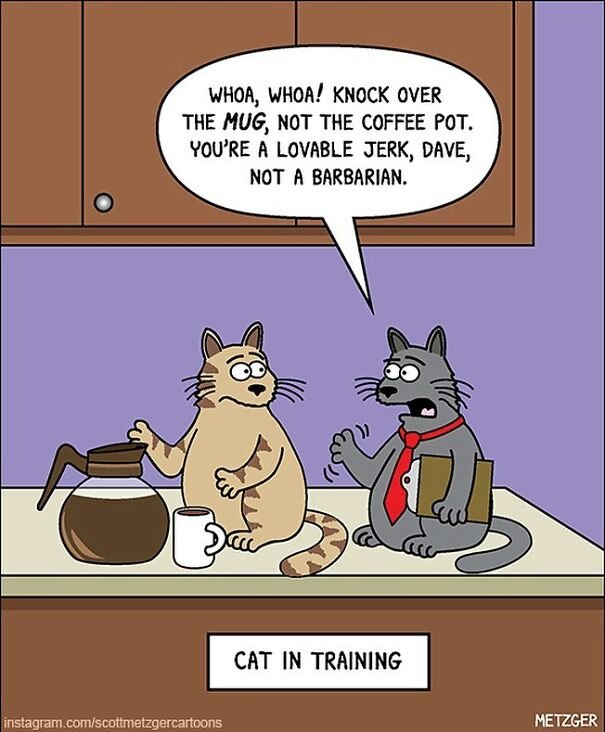
I recently saw this phrase on the front of a t-shirt: Train you must. I don’t learn a lot of good life lessons by reading t-shirts—most verbiage written on t-shirts is trivial—but this got my attention and has kept it.

Training is the best way to develop skills and make progress. Reading books is good, listening to podcasts and lectures helps, invigorating experiences contribute to our lives, but training is the best way to become a better, more competent person. To become a physician, pilot, musician, writer, teacher, manager, one must commit to the discipline of training.

Here are characteristics of what good training involves. Training:

      • Requires a considered commitment. In order to train, you might have to give up something, like time or resources.
      • Takes time. You’ll not complete training for a significant skill in a day; it will likely take years.
      • Focuses your attention.
      • Requires a disciplined approach. One doesn’t casually or flippantly train. There’s usually a structure to work within and a curriculum to complete.
      • Includes a measurable outcome. Most disciplines offer a test/certification. 
      • Usually involves a coach, someone who will observe you in real time and give you immediate feedback.
      • Produces a usable skill.

Years ago I aspired to be a wine expert. Because of my religious upbringing, I didn’t even taste wine until I was 44 years old, but when I learned that the Bible doesn’t prohibit drinking wine, I became interested in the world of wine. There are three organizations that offer certifications in wine: Society of Wine Educators, WSET, and the Court of Master Sommeliers. I pursued certifications in all three. I committed to train to become a wine expert. 

I read extensively (I have 36 books in my library about wine), I trained with the Dallas chapter of Wine Sommeliers, I memorized charts, graphs, and theory, I studied with a Master of Wine, and attended seminars and weekly blind-tastings. Eventually, I passed exams with all three agencies. 

After studying for five years I sensed that my understanding of wine would not be complete until I actually grew and processed my own grapes, so six years ago I planted a small vineyard in East Texas and have produced wine from three harvests. I grow grapes, harvest, press, ferment, and bottle. I’ve learned a lot.

What training program are you currently involved in? Are you encouraging your children and grandchildren to commit to a training program?
 

Orchestrate conversations

Years ago, I realized that if left undirected, many conversations among groups of people are awkward, trivial, and unbalanced. This first became clear to me when I met with a group of older men who had been meeting together once a week for years. I assumed that because they had met so often that they knew each other well. But I soon realized that they had never talked about serious issues of life; they just repeated the same conversations about the weather, sports, and news. Two of the men were unaware they were both veterans of WW2.

I continued to meet with this group each week for several months. Once I became a trusted member, I started “orchestrating” the conversations by asking questions and encouraging everyone to respond. I started with simple, non-invasive questions like, “Where were you born and what was the first ten years of your life like?” Eventually we shared on a deeper level, “What’s been the biggest challenge of your life? What are your dreams for the next 10 years?” As the conversations deepened, so did the relationships. 

Currently, when I’m with a group of people (my family, friends, colleagues), I often initiate topics to discuss, and ask everyone to share their thoughts. Once you create a safe environment where people are free to share their thoughts, and then suggest a meaningful topic, good conversation ensues. 

Where do the questions come from? I make most of them up on the spot, based on the group. But there are hundreds of good ice-breaker questions. I recently Googled conversation starters and found these.

  1. What has been the best decade in your life?
  2. If you could dedicate your life to solving one problem, what would it be?
  3. What is the most spontaneous thing you’ve ever done?
  4. How many uses are there for a brick?
  5. Who is the most famous person you have met?

Mary reminds me to not dominate conversations with my questions; sometimes people just want to chit-chat. But adding some direction and purpose to conversations helps deepen relationships and and leads to interesting conversations. 

The next time you’re with a group of people, try it.

Psychologist Arthur Aron has written 36 questions arranged in three sets. The questions become progressively more engaging and require a deeper level of sharing.

SET I
  1. Given the choice of anyone in the world, whom would you want as a dinner guest?
  2. Would you like to be famous? In what way?
  3. Before making a telephone call, do you ever rehearse what you are going to say? Why?
  4. What would constitute a “perfect” day for you?
  5. When did you last sing to yourself? To someone else?
  6. If you were able to live to the age of 90 and retain either the mind or body of a 30-year-old for the last 60 years of your life, which would you want?
  7. Do you have a secret hunch about how you will die?
  8. Name three things you and your partner appear to have in common.
  9. For what in your life do you feel most grateful?
  10. If you could change anything about the way you were raised, what would it be?
  11. Take four minutes and tell your partner your life story in as much detail as possible.
  12. If you could wake up tomorrow having gained any one quality or ability, what would it be?
SET II
  1. If a crystal ball could tell you the truth about yourself, your life, the future or anything else, what would you want to know?
  2. Is there something that you’ve dreamed of doing for a long time? Why haven’t you done it?
  3. What is the greatest accomplishment of your life?
  4. What do you value most in a friendship?
  5. What is your most treasured memory?
  6. What is your most terrible memory?
  7. If you knew that in one year you would die suddenly, would you change anything about the way you are now living? Why?
  8. What does friendship mean to you?
  9. What roles do love and affection play in your life?
  10. Alternate sharing something you consider a positive characteristic of your partner. Share a total of five items.
  11. How close and warm is your family? Do you feel your childhood was happier than most other people’s?
  12. How do you feel about your relationship with your mother?
SET III
  1. Make three true “we” statements each. For instance, “We are both in this room feeling … “
  2. Complete this sentence: “I wish I had someone with whom I could share … “
  3. If you were going to become a close friend with your partner, please share what would be important for him or her to know.
  4. Tell your partner what you like about them; be very honest this time, saying things that you might not say to someone you’ve just met.
  5. Share with your partner an embarrassing moment in your life.
  6. When did you last cry in front of another person? By yourself?
  7. Tell your partner something that you like about them already.
  8. What, if anything, is too serious to be joked about?
  9. If you were to die this evening with no opportunity to communicate with anyone, what would you most regret not having told someone? Why haven’t you told them yet?
  10. Your house, containing everything you own, catches fire. After saving your loved ones and pets, you have time to safely make a final dash to save any one item. What would it be? Why?
  11. Of all the people in your family, whose death would you find most disturbing? Why?
  12. Share a personal problem and ask your partner’s advice on how he or she might handle it. Also, ask your partner to reflect back to you how you seem to be feeling about the problem you have chosen.

What you can do, do

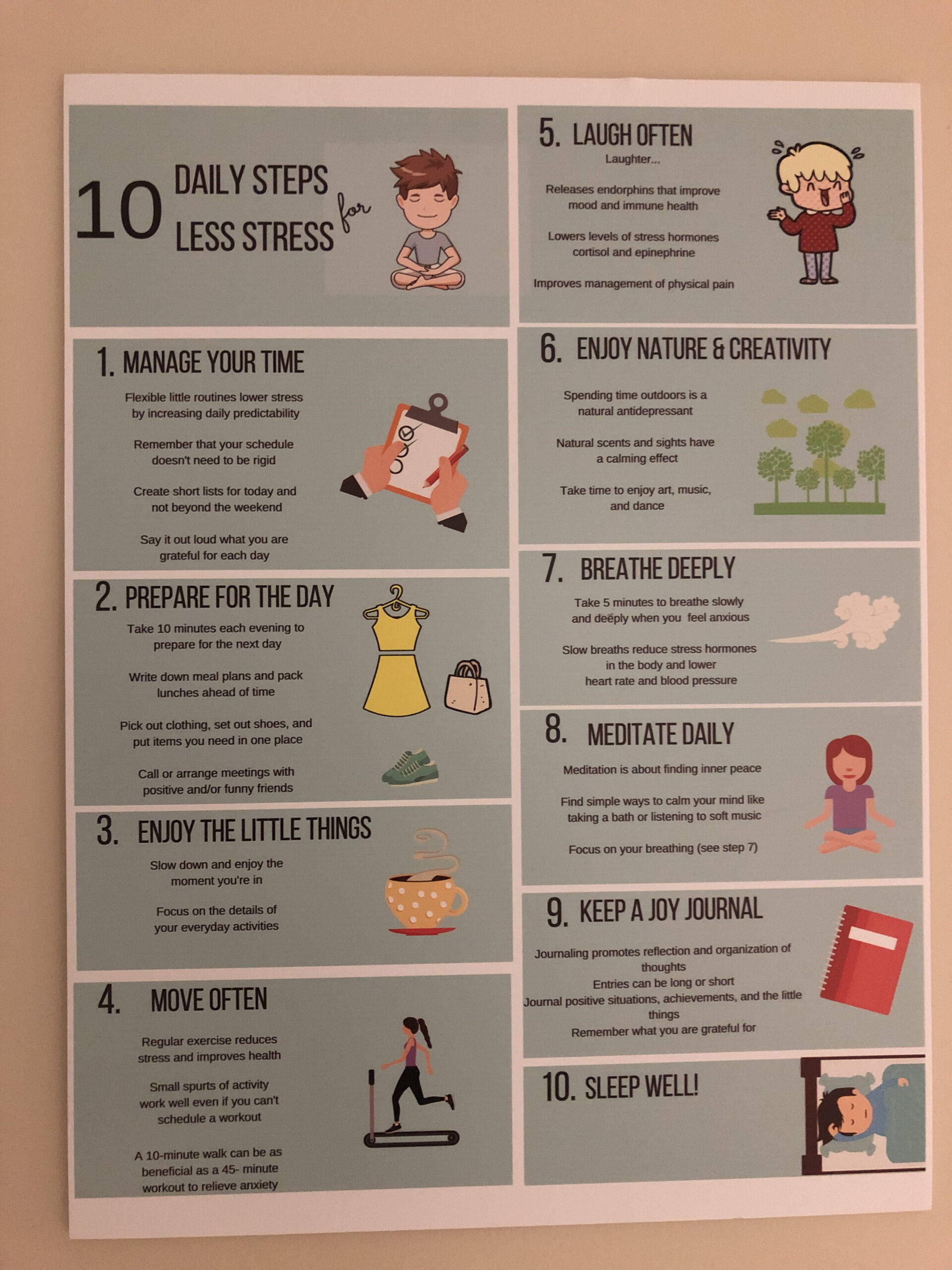
I saw this poster in the psychiatric ward of a hospital. It was for the benefit of patients who are suffering from depression, anxiety, schizophrenia, bi-polar disorder, obsessive-compulsive disorders, post-traumatic stress disorder, and other psychological disorders. My heart goes out to those who suffer from these debilitating ailments. I have struggled with depression so I empathize with these types of challenges.

I like this poster because it implies an encouraging message: “You may feel trapped in a mire of mental dissonance. Our physicians will do all they can do to help you. But here are 10 things you can start doing immediately that will help. You can do these, so do them.”

My main point is: Don’t use circumstances that are ostensibly out of your control as an excuse for inactivity. Take responsibility for discovering and doing things you can do that will be beneficial, regardless of how small or insignificant they may seem. I’m advocating initiative, engagement, and action; not acquiescence, passivity, or capitulation.

In life, don’t focus on things you cannot control; concentrate on things you can do and do them.

The image of the poster is small so the words may be hard to read. Here’s what it says.

Manage your time — Flexible little routines lower stress by increasing daily predictability. Remember that your schedule doesn’t need to be rigid. Create short lists for today and not beyond the weekend. Say out loud what you are grateful for each day.

Prepare for the day — Take 10 minutes each evening to prepare for the next day. Write down meal plans and pack lunches ahead of time. Pick out clothing, set out shoes and put items you need in one place. Call or arrange meetings of your everyday activities.

Enjoy little things — Slow down and enjoy the moment you’re in. Focus on the details of your everyday activities.

Move often  Regular exercise reduces stress and improves health. Small spurts of activity work well even if you can’t schedule a workout. A 10-minute walk can be just as effective as a 45-minute workout to relieve anxiety.

Laugh often — Laughter releases endorphins that improve mood and immune health; lowers levels of stress hormones, cortisol, and epinephrin; and improves management of physical pain.

Enjoy nature and creativity — Spending time outdoors is a natural antidepressant. Natural scents and sights have a calming effect. Take time to enjoy art, music, and dance.

Breathe deeply — Take 5 minutes to breathe slowly and deeply when you feel anxious. Slow breaths reduce stress hormones in the body and lower heart rate and blood pressure. 

Meditate daily — Meditation is about finding inner peace. Find simple ways to calm your mind, like taking a bath or listening to soft music.

Keep a joy journal — Journaling promotes reflection and organization of thoughts. Entries can be long or short. Journal positive situations, achievements, and the little things of life. Record what you are grateful for.

Sleep well.

Join me on a trip to France, Netherlands, Portugal, Gibraltar and Spain


I love to travel with friends.

Thirteen years ago I started hosting an annual international trip for friends. I truly wanted to use my travel-knowledge to help others experience the wonders of travel. If you’ve not traveled much, it can be intimidating, mysterious, and confusing. My trips make travel accessible, safe, reasonable, and fun.

It’s also beneficial to travel with others-as opposed to traveling solo-because experiences are magnified when we have them with others. When you have an “ah-ha” moment–like seeing the beaches of Normandy– have it with others and it will be more deeply etched into your mind. Also, deep friendships are formed when you’re traveling with a group. Some of my best friends are those I have traveled with often. I hope you’ll join Mary and me for a life-enhancing 15-days.

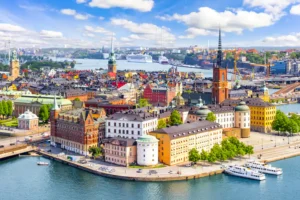
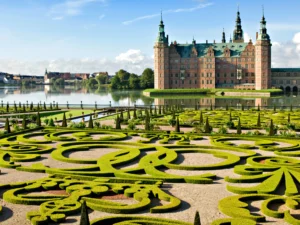
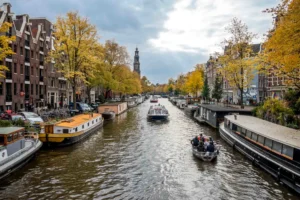
On our 2026 trip, we’ll explore Iberia. The culture of the Iberian Peninsula is diverse and rich, shaped by a history of interaction between many civilizations, including the indigenous Iberians, Celts, Romans, Visigoths, and Moors. We’ll visit five countries: Netherlands, France, Portugal, Spain, and Gibraltar (a British Overseas Territory).

Click below for a brochure about the trip.

Iberian-Peninsula-2026-Final Brochure

Two Travel with Friends Information Meeting

Join me for a Zoom meeting on Thursday, January 22 from 7:00-8:00pm. If you want to join this Zoom meeting, email me at djmcminn@msn.com and I’ll send you a link. You can download Zoom for free. You can also participate via a conference call using your mobile phone.

We’ll discuss the itinerary, accommodations, and ports of call. The Q&A will answer all your questions.

If you have any questions, email me at djmcminn@msn.com or call me at 214.783.4414