Everyone needs a hobby

“A man can wear out a particular part of his mind by continually using it and tiring it, just in the same way as he can wear out the elbows of his coat…to be really happy and really safe, one ought to have at least two or three hobbies, and they must all be real.” Winston Churchill, Pall Mall, 1925

I just read Daniel Smith’s book How to Think Like Churchill. I recommend it. Smith has written 26 short chapters about Churchill’s life in a blend of biography and life lessons. We’re all familiar with Churchill’s incredible life and legacy, but before reading the book, I was unaware that he was a huge advocate of hobbies and had many himself. Smith devotes an entire chapter to discussing this topic. I read that Churchill:

      • Was a keen fan of music, particularly military marches and classics from the music hall.
      • Enjoyed cinema, particularly the works of the Marx Brothers and Walt Disney.
      • Was a connoisseur of fine wine, food, and cigars.
      • Was a keen hunter, riding with hounds even in his seventies, as well as enjoying big game hunting.
      • As a boy he had an interest in stamp collecting and card games. 
      • Enjoyed landscaping and especially, somewhat unexpectedly, bricklaying, to the extent that he became a member of the Guild of Bricklayers.
      • The pastime he enjoyed most was painting. He took up painting in his forties and in his lifetime produced 500 works. He insisted that all his unwieldy artist’s paraphernalia—including stools, easels, canvases and paint boxes—be taken on his exotic travels. In 1948 he published a volume entitled Painting as a Pastime. He was quite good at it; Pablo Picasso said, “If Churchill were a painter by profession, he’d have no trouble making a living.”

A hobby should not be just an extension of your profession. If you’re a CPA working for an accounting firm, reading the latest journal articles about the tax code does not qualify as a hobby. A real hobby might be pursuing scuba diving or ballroom dancing. Escape from your bubble and become a novice in a different area.

A good hobby should initially put you in unfamiliar territory. You’ll start as a neophyte, feel uncomfortable, and fail often. But ultimately you’ll get better and the journey will be invigorating.

I have several major hobbies. I create pedagogical art (art that teaches a lesson) and I am a wine expert (I have three advanced certifications in wine studies and maintain a small vineyard). I enjoy these hobbies so much I often get into the “flow” when engaging in them; I lose track of time and enter a different mental state.

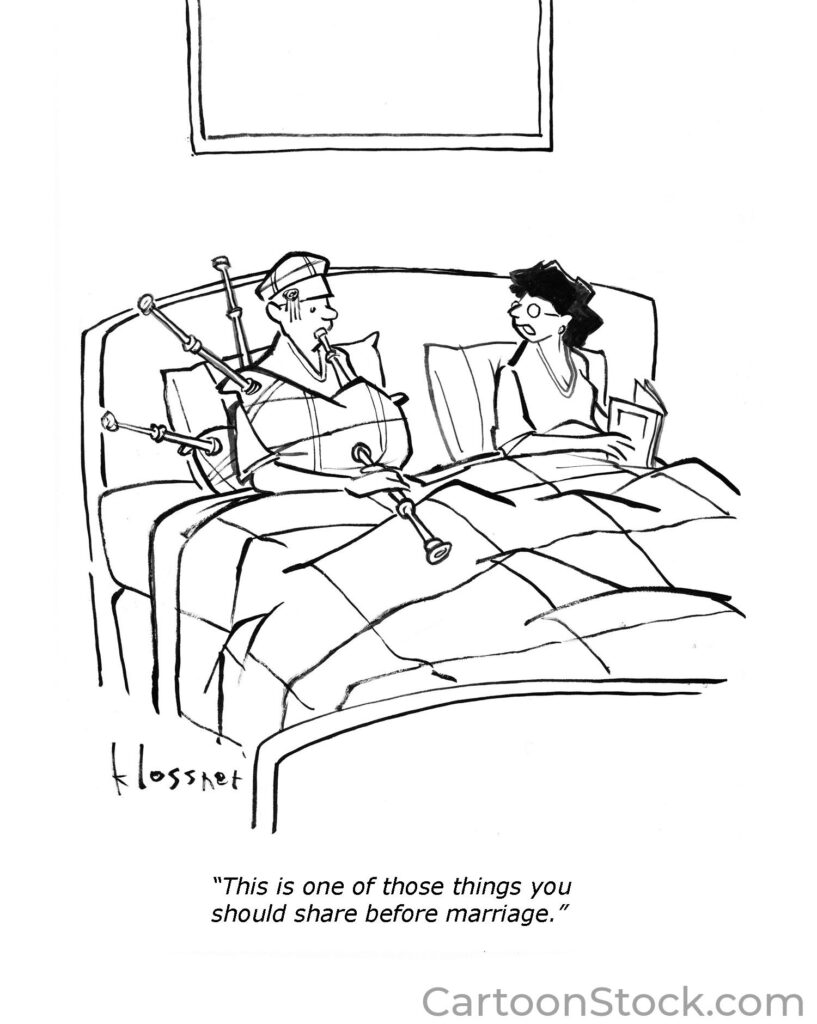
It’s beneficial for couples to share a hobby. My wife and I love to travel. We want to visit 80 countries before we die; we’ve been to 65. We enjoy visiting museums; we’ve been to most of the great art museums in the world. We enjoy cooking together; sometimes we’ll spend three hours preparing and savoring a meal.
Hobbies are extremely beneficial. They:

      1. Help reduce or eradicate boredom. 
      2. Give you something to do when you have extra time. 
      3. Give you an activity you can look forward to and get excited about.
      4. Help you develop new skills.
      5. Enhance your life. 
      6. Relieve stress.
      7. Promote better health and may lower the risk of high blood pressure. 
      8. May reduce the risk of depression and dementia.
      9. Some hobbies are good for you physically; they keep you active.
      10. Improve creativity.
      11. Get you out of your mental and physical ruts.
      12. Can strengthen relationships.
      13. Provide a good transition to retirement.

It’s never too late to start a hobby. The old saying—When is the best time to plant a tree? The best time is twenty years ago; the next best time is today.—applies to starting hobbies.
Know the difference between biblical absolutes, spiritual convictions, and personal opinions

There is a difference between a biblical absolute, a spiritual conviction, and a personal opinion. It’s important to know the difference and not misapply them. This chart defines the three terms and explains how they differ.

Source Characteristics Proper attitude Example
Biblical absolute The Bible God’s eternal, objective truth applicable to everyone I embrace this and I encourage you to embrace it too. Thou shalt not steal.
Personal conviction The Holy Spirit’s conviction and leadership A personal conviction that I should follow  I embrace this personal conviction but I don’t expect you to. We send our children to private, Christian school.
Personal opinion and preference Self A personal preference I have personal preferences, but I’m also willing, at times, to yield to your preferences. I prefer traditional worship, but I know many people prefer contemporary worship, so let’s offer both.

There are several ways to misapply these terms.

  1. Sometimes, we call something a biblical absolute when it is not. Ex: “Christians should not drink alcohol.” There is no biblical prohibition for drinking alcohol. It may be your spiritual conviction, but it’s not a biblical absolute. We misrepresent God and confuse people when we label something as sin that the Bible doesn’t. 
  2. Sometimes, we erroneously elevate a spiritual conviction to the level of biblical absolute. Ex: “You must have a daily quiet time.” This is certainly a good idea, but it’s a spiritual conviction, not a biblical absolute. Don’t suggest that God will be displeased at me if I don’t have a daily quiet time.
  3. While it’s good and normal to have personal preferences, at times we may need to hold them loosely and yield to the preferences of others. We should acknowledge and accept other people’s preferences.

Consider each of these statements. Is it a biblical absolute, spiritual conviction, or personal preference?

  1. Do not speak unwholesome words.
  2. We should sing only hymns in church.
  3. Forgive one another.
  4. I like living in the country.
  5. We should sing only praise choruses at church.
  6. I’m going to read my Bible every morning before I go to work.
  7. I would rather spend my extra money on nice clothes than a nice car.
  8. It’s important for a church to have Sunday night services.
  9. Be completely gentle.
  10. We feel strongly that our children should attend public school.
  11. Encourage one another.
  12. I’m going to participate in the anti-abortion rally.
  13. On my day off, I enjoy solitude.

Numbers 1,3,9 and 11 are directives from the Bible, so they are nonnegotiable. Numbers 6,10 and 12 are spiritual convictions. The remaining statements are preferences.

Know when to hold tight to your persuasions and when to hold them loosely.

Our memories are riddled with inaccuracies

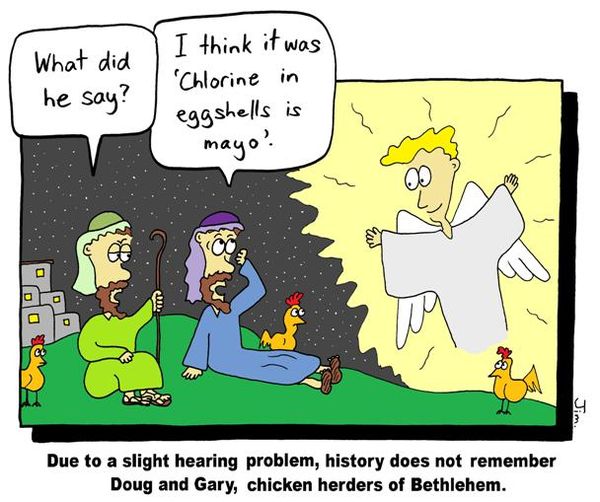
Last month, my HR department asked me to write an incident report about an event that happened at work. In the report I wrote, “I was standing in the break room when Ken and Nancy walked in.” In Ken’s report, he wrote, “Nancy and I were in the break room when Don walked in.”

So, who was right? Upon deeper reflection, I was wrong. My memory—even of a recent event—was inaccurate.

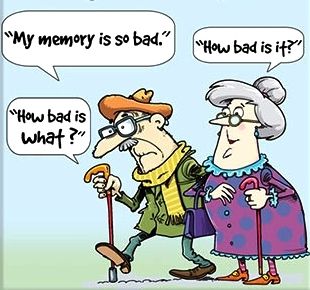
But I’m not the only one who succumbs to this human fallacy—we all do. Our memories are riddled with inaccuracies. 

Ulric Neisser was a German-American psychologist and member of the US National Academy of Sciences. He has been referred to as the “father of cognitive psychology”. His primary area of research was about perception and memory. In 1986, the day after the Challenger space shuttle exploded, he asked his students to write a paper about when and how they learned about the disaster. Three years later, he interviewed these students and asked them to recall what they had written. Less than seven percent of their comments correlated with their initial submissions. Fifty percent of their recollections were incorrect in two-thirds of the points and twenty-five percent failed to match even a single detail. One student had first written that she was in her apartment when she heard the news; three years later she said she was at work. One student had written that he was with friends; later he was sure that he was by himself.

When President Lincoln died, his Secretary of War, Edwin Stanton, allegedly said, “Now he belongs to the ages.” But James Tanner, a young soldier who was asked to take notes of the last hours of Lincoln’s life and who was in the room at the time of this death, wrote that Stanton said, “Now he belongs to the angels.” Was it ages or angels? It’s hard to know. Read here for an in-depth discussion of this interesting conflict of recorded history.

Perplexing, isn’t it? How should we respond to mankind’s unstable and fallible memory? 

For starters, don’t be so cocksure about what you remember. You’re probably often wrong. Secondly, be skeptical about other people’s recollections. When someone recounts an experience, hold it loosely.

Don’t judge someone by their worst moment or their worst trait

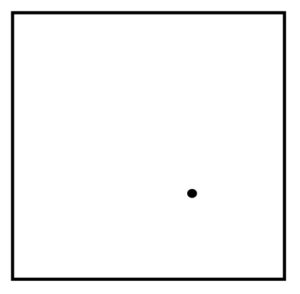
Look again at the picture at the top of this post. What do you see?

Most of us see a black dot. We overlook the white space and focus on the one, small dot.

Now think of the entire picture as representing a person’s life—it symbolizes the essence and totality of who a person is and what he has done—and the black dot denotes his worst moment or worst trait. Just as our eyes are drawn to the black dot, we often tend to focus on the “black dot” in people’s lives, discounting all their positive attributes. We often judge others based on a single issue.

But we shouldn’t form our opinion of someone based on their worst moment (she had an affair; he got fired from a job; he blew up during a staff meeting.) or their worst trait (he’s always tardy; she’s financially imprudent; she’s vain about her clothes.) While our observations may be accurate, it’s unfair to focus exclusively on them and emphasize them.    

There are two main reasons why we shouldn’t judge others.

1. It’s difficult to truly understand why people act the way they do. 

Henry David Thoreau asked, “Could a greater miracle take place than for us to look through each other’s eyes for an instant?” It’s that difficult. Every person has a story; there’s a reason behind who they are and what they’ve done, but we’re usually not privy to that information. 

Imagine walking through the woods and you see a dog. It looks cute and friendly so you approach the dog to pet it. Suddenly it snarls and tries to bite you. The dog no longer seems very cute and now you’re both afraid and angry. Then, the wind blows away the leaves on the ground and you see that the dog has one of its legs caught in a trap. Now, you feel compassion for the dog. You realize it became aggressive because of its pain and suffering.

We’ve heard the adage, “Never judge another person until you’ve walked a mile in his shoes.” It’s good advice—try to see life from another person’s perspective—and it essentially eliminates judging others because it’s impossible to truly experience someone else’s life. You can’t “walk in someone’s shoes” for a few feet much less a mile. The moral is: Don’t judge.

2. All of us need grace.

Someone has suggested: Don’t judge someone just because they sin differently than you.

In Matthew 7, Jesus says, “Do not judge, or you too will be judged.” Then he tells an anecdote to explain why: “Why do you look at the speck of sawdust in your brother’s eye and pay no attention to the plank in your own eye? How can you say to your brother, ‘Let me take the speck out of your eye’ when all the time there is a plank in your own eye? You hypocrite, first take the plank out of your own eye, and then you will see clearly to remove the speck from your brother’s eye.” The key word in the story is hypocrite. 

Jesus is exposing a blind, ignorant, hypocritical, self-righteous judging that overlooks one’s own faults and focuses on the sins of others. His anecdote is intentionally extreme and a bit humorous: There are two dudes working in a woodshop. One guy looks at the other guy and says with a mixture of disdain and contempt, and with a smirk, “You nincompoop, you’ve got some sawdust in your eye. Come here and I’ll help you with that problem.” All the while he’s got a two-by-four sticking out of his own eye.

I think it’s part of the dark side of our human nature: It’s easy for us to see other people’s faults but we’re blinded to our own. 

Of course, there’s a need for balance relative to recognizing and responding to right and wrong. In society and in our personal relationships, we need reasonable and fair laws, expectations, and boundaries, and sensible responses to violators. I’m not going to address that important topic here because it may distract from my main point. 

Referring back to the picture at the top of this post, instead of obsessing on the black dot (people’s foibles), let’s train ourselves to do the opposite—focus on people’s best moments and their best attributes. Hopefully they will extend the same grace to us.