The art of sharing a meal with other people


Last Friday Mary and I hosted a dinner for 42 people who are going on our trip to Alaska. Wonderful things happened during the three hours we were together. New friendships were formed, old friendships were strengthened, and a spirit of camaraderie developed. We’ll host another dinner with the same people before the trip.

During these meals we experience what the Spanish call sobremesa.

Sobremesa is a Spanish word that describes the time spent around the table after lunch or dinner, talking to the people you shared the meal with; time to digest and savor both food and friendship.

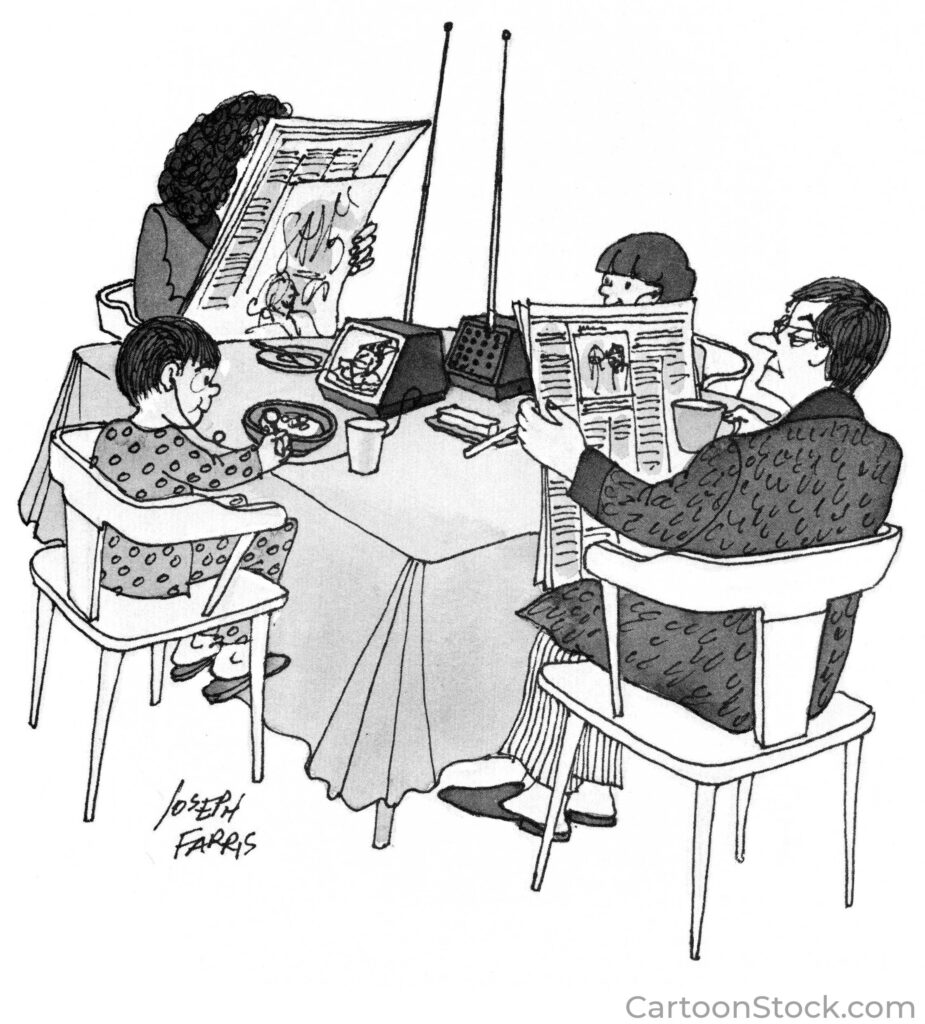
There is something profoundly satisfying about sharing a meal with other people. Eating together is one of the oldest and most fundamental unifying human experiences. It can simultaneously fulfill physical, emotional, and relational needs.

It will help establish and deepen friendships

If I share my food with you it’s either because I love you a lot, or because it fell on the floor and I don’t want it. (That’s a joke.) Seriously, I can’t think of a better way to solidify friendships than sharing a meal together. It slows down our pace, narrows our space, focuses our attention, and creates a relaxing ambience—all of which are beneficial for deepening friendships.

It’s good for business

Since humans first walked the earth, we’ve known that sharing a meal can be good for business. For instance, a recent study revealed that it doesn’t take much to get a doctor to prescribe a brandname medication—just a free meal. The study found that U.S. doctors who received a single free meal from a drug company were more likely to prescribe the drug than doctors who received no such meals. [Even Cheap Meals Influence Doctors’ Drug Prescriptions, Study Suggests, Peter Loftus, WSJ, June 20, 2016].

I’ve never understood why some organizations are stingy with the amount of funds allocated for business meals. I once worked with a group of six senior executives at a $75 million dollar a year business. They were frustrated that the CEO, in order to save money, eliminated their budget for business meals, which saved the company a whopping $24k a year. I suspect that poor decision cost the company a lot of revenue.

It engenders good will

Treat someone to a $15 lunch and they’ll be your friend forever. Well, that’s an exaggeration; but it’s true that even a small amount of money and time will generate a lot of relational capital.

A weekly family meal can become a wonderful family tradition

I enjoy watching the sitcom, Bluebloods (on CBS). It follows the lives of three generations of New York City police officers. In most episodes, there’s a scene showing their weekly, Sunday afternoon family meal in which they gather around the dinner table to talk, argue, laugh, and pass the potatoes.

Every family would benefit from this tradition. My family has started eating a meal together every Friday night at the Lakehouse, followed by games. Last week the game was, Get in groups of three people, grab one of the dogs, and teach it to dance. In a moment, choose a song you want to dance to and let it rip. We laughed so hard our sides ached.

I double-dog-dare you: initiate and host meals and enjoy the sobremesa.
Reject feelings of helplessness and do what you can do.


We can’t control most things in life. We can’t control the weather, other people, our DNA, our family of origin, etc. But in most situations, there are things we can control that lead to health and happiness. We need to embrace and do those things.

I am impatient with people who are unhappy and think there are no solutions to their problems so they become passive; they do nothing. They refuse to do even simple things that could improve their life.

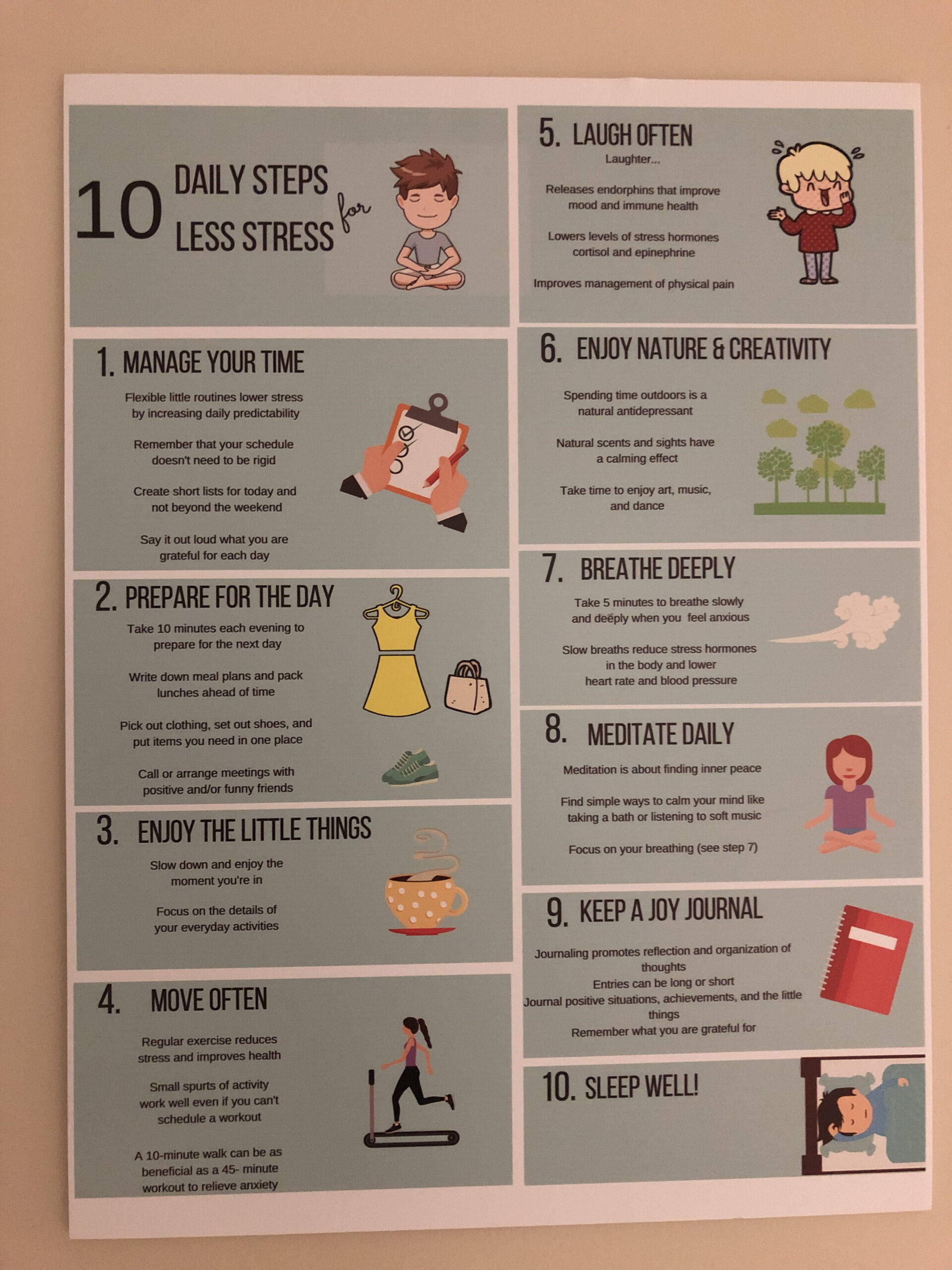
I saw this poster (above) in the psychiatric ward of a hospital. It was for the benefit of patients who are suffering from depression, anxiety, schizophrenia, bi-polar disorder, obsessive-compulsive disorders, post-traumatic stress disorder, and other psychological disorders. My heart goes out to those who suffer from these debilitating ailments. I have struggled with depression so I empathize with these types of challenges.

I like this poster because it implies an encouraging message: “You may feel trapped in a mire of mental dissonance. Our physicians will do all they can do to help you. But here are 10 things you can start doing immediately that will help. You can do these, so do them.”

Don’t use circumstances that are ostensibly out of your control as an excuse for inactivity. Take responsibility for discovering and doing things you can do—regardless of how small or insignificant they may seem—that will contribute to a desired outcome. I’m advocating initiative, engagement, and action; not acquiescence, passivity, or capitulation.

In life, don’t focus on things you cannot control; concentrate on things you can do and do them.

The image of the poster is small so the words may be hard to read. Here’s what it says.

Manage your time — Flexible little routines lower stress by increasing daily predictability. Remember that your schedule doesn’t need to be rigid. Create short lists for today and not beyond the weekend. Say out loud what you are grateful for each day.

Prepare for the day — Take 10 minutes each evening to prepare for the next day. Write down meal plans and pack lunches ahead of time. Pick out clothing, set out shoes and put items you need in one place. Call or arrange meetings of your everyday activities.

Enjoy little things — Slow down and enjoy the moment you’re in. Focus on the details of your everyday activities.

Move often  Regular exercise reduces stress and improves health. Small spurts of activity work well even if you can’t schedule a workout. A 10-minute walk can be just as effective as a 45-minute workout to relieve anxiety.

Laugh often — Laughter releases endorphins that improve mood and immune health; lowers levels of stress hormones, cortisol, and epinephrin; and improves management of physical pain.

Enjoy nature and creativity — Spending time outdoors is a natural antidepressant. Natural scents and sights have a calming effect. Take time to enjoy art, music, and dance.

Breathe deeply — Take 5 minutes to breathe slowly and deeply when you feel anxious. Slow breaths reduce stress hormones in the body and lower heart rate and blood pressure. 

Meditate daily — Meditation is about finding inner peace. Find simple ways to calm your mind, like taking a bath or listening to soft music.

Keep a joy journal — Journaling promotes reflection and organization of thoughts. Entries can be long or short. Journal positive situations, achievements, and the little things of life. Record what you are grateful for.

Sleep well.

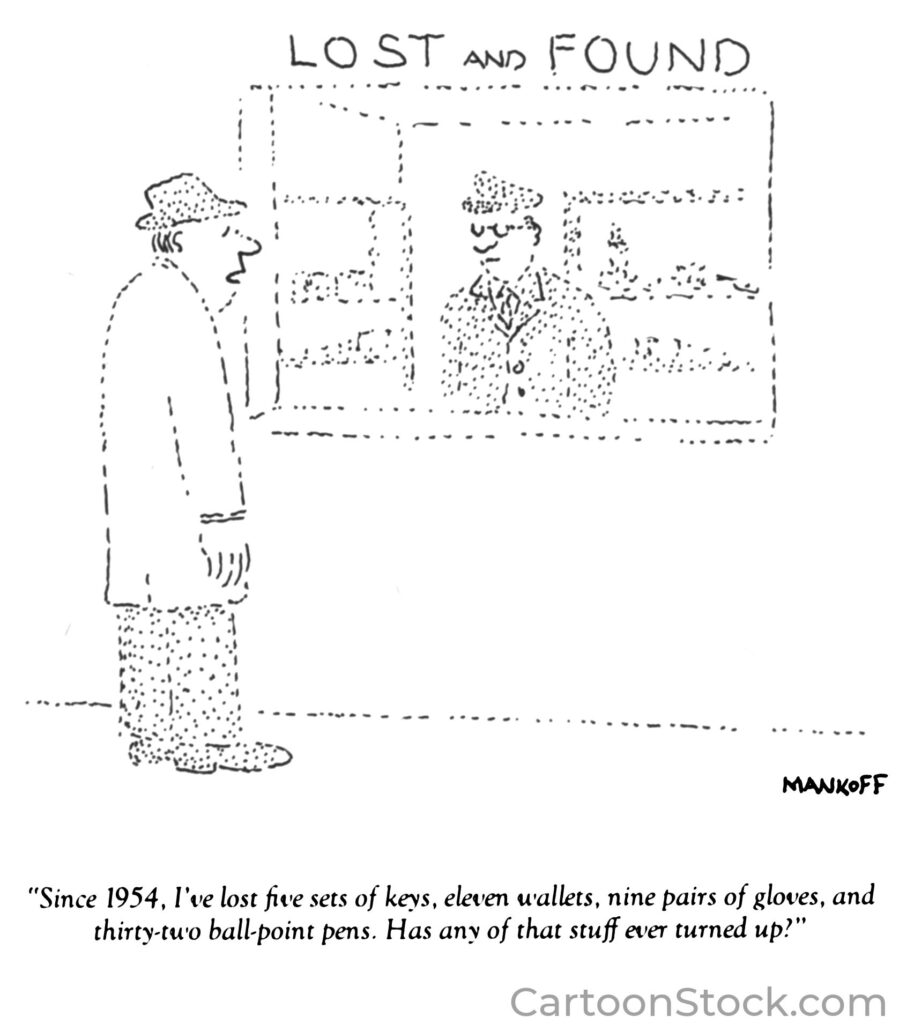
“It once was lost, but now it’s found” – the joy of recovery


David Whyte, Anglo-Irish poet, tells a story about losing and finding his favorite pen, a Mont Blanc given to him by a friend. It is his favorite pen, not because it’s an expensive instrument, but because for decades it has been his constant companion and he uses it to write poetry and sign books.    

He was on a red-eye flight returning to Belfast. Moments before the plane landed, as he started getting his belongings together, he realized he must have dropped his pen. He was sitting in first class, so his seat was not the simple, straightforward kind; it was highly mechanized and hard to access. He tried in vain to find his pen.

When all passengers were off the plane the stewardess helped him look for it, but to no avail. She finally said, “Mr. Whyte, the only thing left to do so is ask an engineer to board the plane and take the seat apart.” He gently said, “Please do.”

Twenty minutes later, with the seat torn apart, there it was…his pen.

Whyte says that from that moment on, he valued the pen even more, for it had been lost but now was found. 

He uses that story to teach an important truth: Sometimes losing something and then regaining it enhances our appreciation of it. Whyte even suggests that we should periodically play a mind game with ourselves in which we “experience” the lost/found/increased-value scenario, but without having actually suffered the loss. 

Try this:

      • Close your eyes for a few minutes and imagine that two years ago you lost your sight. The world is now dark 24/7. Then imagine that through a medical procedure, or miracle, your sight has been restored. Now open your eyes and savor the sight of objects, people, colors, and shapes. The color red. A sunset. A loved one. You can drive a car again. You’ll have a greater appreciation for something you have taken for granted—sight. 
      • Imagine that you have lost someone you love: a child, friend, or spouse. Think deeply about what life would be like without him or her; feel the sadness. But then remind yourself that you haven’t lost them, it’s just a mind game. 
      • Imagine that you’re confined to solitary confinement. You’re in an 8×10 cell (slightly bigger than the average bathroom). You’re by yourself in the cell for 22 to 24 hours a day. But your confinement is only a daydream. With a new sense of gratitude, enjoy the rest of your day as the free person you really are.

Whenever I play this mind game, I become more grateful, less ill-tempered, more mindful and humbler, and more aware of God’s goodness and the joy of living life.

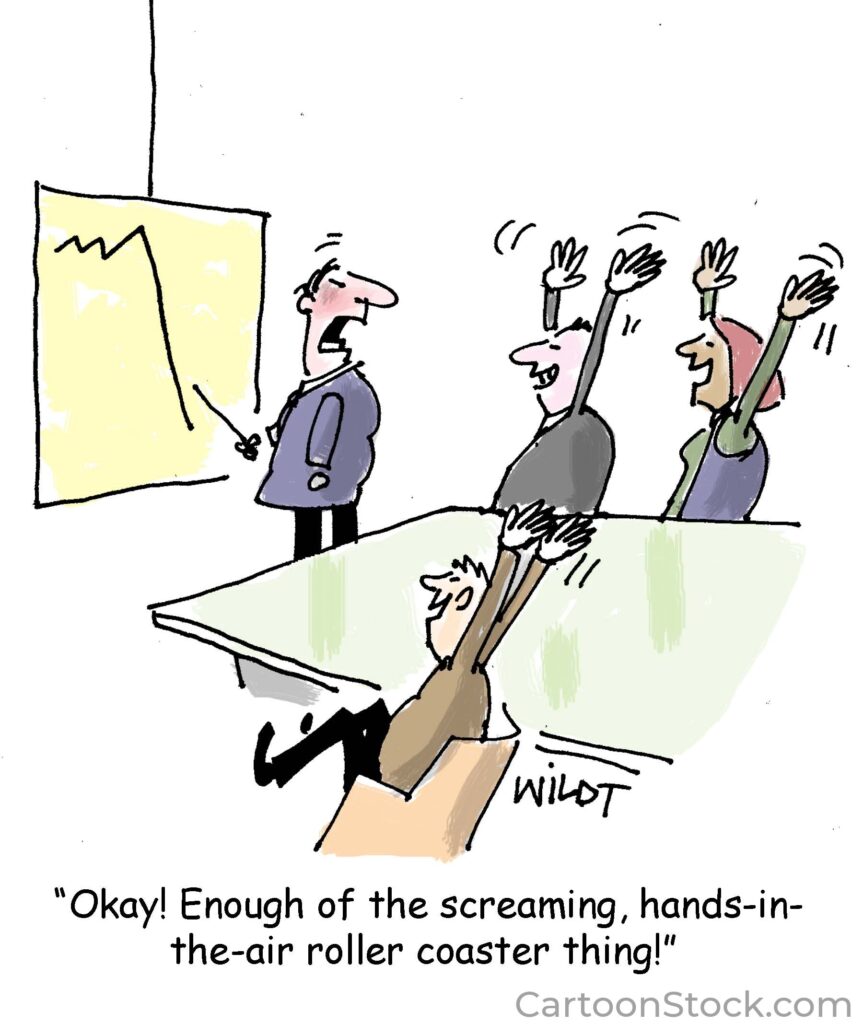
Don’t overact to life’s ups and downs

An Eastern monarch asked his wise men to invent a phrase that would apply to all times and in all situations. After careful deliberation, they offered this statement: “And this too shall pass away.”

When Abraham Lincoln heard the story, he mused: “How much it expresses. How chastening in the hour of pride; how consoling in the depths of affliction.”

When you’re going through tough times, don’t be overly discouraged because “this too shall pass away.” And when you’re going through times of prosperity, don’t be smug and proud because “this too shall pass away.” Events are seldom as catastrophic or fortunate as we think. This truth, if embraced, will give us ballast and stabilize our emotions.

In my early forties I had several career leaps that catapulted me up near the top of my profession. The rails were greased and the momentum strong. But the high times were soon tempered by the challenges of life. Good times don’t last forever.

In my late forties I became clinically depressed. I thought my life as I knew it was coming to an end. If you’ve never been depressed, it’s hard to understand the feelings of hopelessness and confusion that torment the mind. I told my wife that we needed to liquidate our belongings and go live with her mother out in the country. But that season of my life passed. With the help of medications, I climbed out of the dark abyss and resumed normal life.

Winston Churchill touched on this thought when he said, “Success is not final…failure is not fatal…it’s the courage to continue that counts.”

Life is a series of ups and downs, but the peaks and the valleys seldom last. So don’t be too discouraged by the low points nor too emboldened by the high points in life. Remind yourself and others of the transitory nature of life. Try to achieve a balanced perspective on life.