
Don’t take out your anger on innocent people.

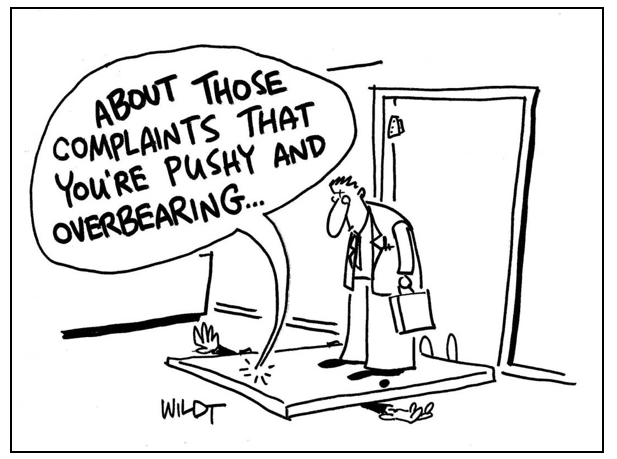
Writer Sarah Lyall tells of a man’s outburst in a supermarket when he couldn’t get a certain type of cheese—a blue cheese called Cambozola. The man was obnoxious and belligerent. A store employee observed, “I don’t think this is about the cheese.”

We’re all guilty of this unfair, unproductive, immature, hurtful, and wrong behavior. We’re angry about X, but we express our anger to people that are unrelated to X. We’re frustrated at work and when we get home we yell at our spouse. We’re frustrated at home and take it out on our coworkers. We’re angry about something but we give grief to the deli worker at the grocery store.

In these cases, it’s not about the cheese. It’s about unresolved and misplaced anger.

Sometimes anger resolves itself. If I’m upset at a minor issue—the lawn mower won’t start—in time the anger will dissipate. But if the anger is deep seated, I need to talk it out with a counselor or a friend. 

If we’re angry because we think someone has done us wrong, we should properly express our anger to the person or persons we think offended us. In a controlled manner, share your perspective and be open to hear “the other side of the story.” Approach these conversations carefully because your anger may be unjustified or overblown.   

Or, we can simply choose to drop it. 

If we do take out our frustration on an innocent bystander, we need to apologize. Do that often enough and it will help change your behavior. Don’t ever apologize for your misbehavior and people will begin to avoid you. 

One of the hardest things to do in life—requiring extreme self-awareness and self-control—is to sense when you’re about to take your frustration out on the innocent, and not do so. Better yet, we can even anticipate acting badly and make a decision to preempt bad behavior. For instance, having had a bad day at work, while driving home I should make a note-to-self—“I’ve had a hard day.”—and remind myself to not take it out on my family.

I love that phrase—It’s not about the cheese. I’m going to suggest to my family that we use it with one another as a verbal cue when we think one of us is venting on an innocent bystander.

Avoid situations in which the minority can rule

Cartoonstock.com: Board meeting where chairman is manually lifting everyone's hand with ropes and saying, "Excellent—It's unanimous!"

Years ago I served a church that was searching for a senior pastor. Eleven people were on the search committee. In their first meeting, someone must have suggested that their final decision be unanimous—to call a new pastor, all eleven members must be in agreement. [A scripture verse might have been used to support this position, “That they will all be one, just as you, Father, are in me and I am in you” (John 17:21).]

After months of prayer, and multiple interviews, ten members of the committee were convinced that one particular candidate was the right person for the job. One person dissented. Because of their commitment to act unanimously, the will of one person prevailed over the preferences of ten people. The minority ruled.

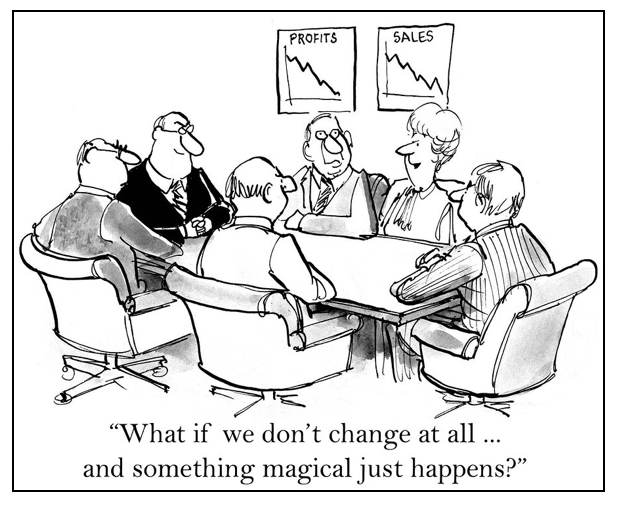
This predicament is called minority rule and it should be avoided.

Every team or committee should be composed of vigorous-thinking individuals who are striving to make good decisions. Everyone should have a voice and a vote, but one person should not be given the power to overrule the opinion of others. It might be reasonable to say that 70% of the group must be in agreement, but to set the bar at 100% is naive, unnecessary, and can be detrimental. There’s nothing wrong with a split decision. 

A split decision may even  indicate that the right decision was made because it implies that critical dialogue was pursued and multiple perspectives were considered. While a unanimous decision could indicate that the decision is simple and the best answer was obvious, or that everyone genuinely agrees, it can also indicate that the group is not taking the decision seriously, all variables have not been explored, or that some members may be intimidated by the arguments of those who are more demonstrative and verbal.

What do you think?

There are consequences to everything we do.


This is a picture of me teaching my granddaughter, Claire, how to turn a light switch on and off and what happens when she does. Every time she throws the switch she looks at the light fixture. She’s learning that there’s a connection between her hand moving the switch and the light being on or off.

I’m introducing her to the immutable concept that all actions have consequences. Cause and effect—the direct relationship between an action or event and its consequence or result.

In the coming years I’ll expand this lesson to include:

      • All words have consequences. 
          • When I spoke harshly to a direct report, it created a breach in our relationship.
          • When I said “I love you” to my daughter, it strengthened our relationship. 
      • All thoughts have consequences. 
          • Daydreaming about my granddaughter brings me joy and motivates me to be a better grandfather. 
          • Critical thoughts about people sully my mind.  
      • All commitments have consequences. 
          • I committed to spend my life with Mary. I’m so glad I did. 
          • In 1984 I invested in a land syndication in Houston. It took decades to recoup my money.  
      • All decisions have consequences
          • In college I decided to major in music.
          • We moved back to Dallas 33 years ago.
      • All financial transactions have consequences. 
          • I started investing in the stock market in the mid-70’s when the Dow Jones average was 844. Today it’s at 43,000. 
          • In the early 80’s I withdrew $10k from my retirement fund to buy a car. If I had not done that the $10k would now be worth $51k. 
      • Neglect, passivity, and procrastination have consequences. 
          • Years ago I didn’t change my home HVAC filters regularly and the motor burned out. 
          • For about 10 years, as a young adult, I did not read any books. 

Every cause creates an effect. Positive actions will lead to positive outcomes, and negative actions will lead to negative outcomes.

Once Claire understands the law of cause and effect, I’ll teach her about the domino effect—when one event sets off a series of similar or related events, a form of chain reaction.

For instance, having turned off the light in a room, you might then trip over a toy and sprain your foot, which will prevent you from participating in the family ski trip. Having turned on a light in a room you may see an object that you thought was lost, which will save you from buying another one, which will allow you to spend the money on a book, which when read may change your life. One thing leads to another which leads to another.

“Claire, the primary lesson you must learn is: before you do anything, think about the potential consequences. Always be thinking of consequences.” 

The Bible says is succinctly; “What a person plants, he will harvest” (Galatians 6:7).

Instead of asking “What did you do today?” ask “What did you learn today?”

At the end of the day, we typically begin casual conversations by asking “What did you do today?” Another good question is, “What did you learn today?” 

Everyone has a quick answer to the first question, even if it’s just “not much.” But most of us would stumble over the second question because we seldom consider learning to be a daily function. We’d be confused by the question and hard-pressed to answer. 

But if asked regularly, the question can serve as a reminder and a prompt, that all through life and in all settings,  we can, and should, continually learn.

We have much to learn.

“We all differ in what we know, but in infinite ignorance, we are all equal.” Karl Popper

Few things will stifle learning more than intellectual arrogance accompanied by a false sense of knowing-it-all. Sadly, some people live as if they have maxed out their learning—there’s little more to learn, do, or become. Instead, we should view ourself as unfinished—a work in progress. We all live in what Popper calls the realm of “infinite ignorance.” A healthy, proper approach to learning is predicated upon a deep humility based on the fact that we know and understand so little.

Imagine a grain of rice inside a five-gallon bucket. The grain of rice represents what you currently know; the space in the bucket represents what you could learn.

Develop an enquiring mind; be curious.

But admitting that we have a lot to learn is not enough, we must have a curious, inquiring mind. 

Albert Einstein once said, “I have no special talent. I am only passionately curious.” I think he was being excessively modest in the first phrase, but notice his emphasis on curiosity in the second. An engaged, curious mind is supple, eager, and insatiable.

Learn from other people.

Secondhand knowledge allows us to benefit from what others have learned. What may have taken someone years to learn (and often through formidable adversity), we can learn quickly and painlessly. One way to do this is to read other people’s thoughts—read 15 minutes a day and think about what you read. Another way to learn from others is through observation and intentional conversation. Lean by listening to and observing others. We can learn from anyone, regardless of their background, education, age, or occupation. 

Learn from your own experiences.

Firsthand knowledge comes from personal experiences. Every day, life offers the opportunity for continuing education. But we’ll only learn if we’re attentive and wanting to learn. The next time you go shopping or eat at a restaurant, or mow your lawn, anticipate that you’re going to learn something and you will. 

Years ago I developed a simple equation to express how we can learn from experiences: the 10/60/30 concept. This notion suggests that in all of life’s experiences you should devote a certain percentage of your time to three elements: anticipate (perhaps 10%), experience (perhaps 60%), and reflect (perhaps 30%). The percentages can be adjusted for different activities.

For instance:

      • When reading a book—spend a few minutes anticipating what you hope to learn from the book, read the book, and then reflect on what you have learned. This ration might be 5/60/35.
      • Prior to a business appointment—think about what you hope to accomplish in the meeting, have the meeting, and then reflect on what transpired and the next steps of action. These percentages might be 15/65/20.
      • Prior to a vacation—research where you’re going, bon voyage, and at the end of each day codify your thoughts in a journal.  These percentages might be 10/70/20.

Tonight, during dinner, ask everyone to share what they learned today. It will prompt interesting conversation.

Let me ask you, “What did you learn today?” Try to have a new answer to that question every day.