
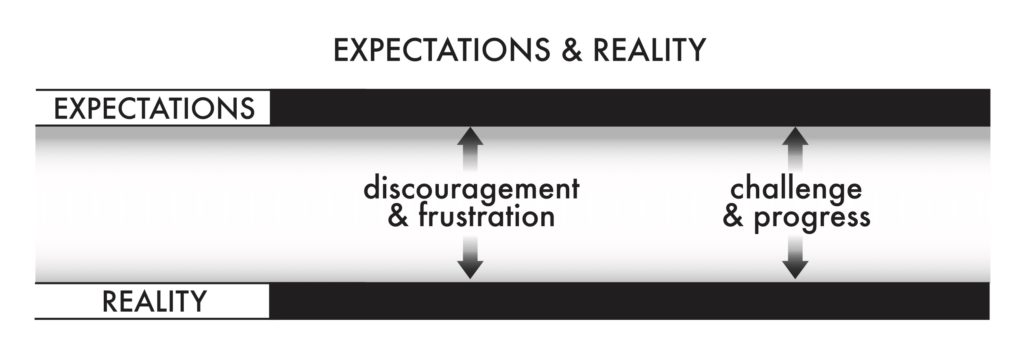
 For years, I had unrealistic expectations regarding a close friend. I was continually frustrated and he was constantly discouraged because of the unrealistic gap between expectations and reality. It was my faulty judgment that was causing the strain and friction in our relationship. When, in my mind, I “lowered the bar” closer to reality, my frustration subsided and the relationship improved.
I have another close relationship in which I have erred in the opposite way: my expectations have been too low and the person has stalled in her growth and development. I need to raise the bar and encourage her to start climbing.
This is a complex topic. Psychologists, leaders, parents, and others have wrestled with this issue and the questions it begets, such as:
- What are the advantages and disadvantages of having high expectations of people?
- What are the advantages and disadvantages of having low expectations of people?
- How can expectations be set such that the disadvantages are minimized and the advantages maximized?
- When is it acceptable to have expectations of people and when is it none of my business?
- How does this expectations/reality syndrome apply to the organizations and businesses I relate to? (Are my expectations of my cell phone provider too high or too low? How about local restaurants? The schools my children attend?)
Think of a current relationship in which you are continually frustrated. Do you need to recalibrate your expectations? Identify one of your relationships in which increased expectations would be beneficial. What would be a good, first step?
Leaders, here are some additional thoughts about setting expectations in your organization.
[reminder]What are your thoughts about this essay?[/reminder]
[callout]12 best books I read last year – book 6 of 12
Talent Is Overrated – What Really Separates World-class Performers from Everybody Else – Geoff Colvin, 2008. You’ll be surprised to learn how people like Mozart, Tiger Woods and Warren Buffet became exemplary, and how we “normal” people can also excel. Click here for more information from Amazon.[/callout]
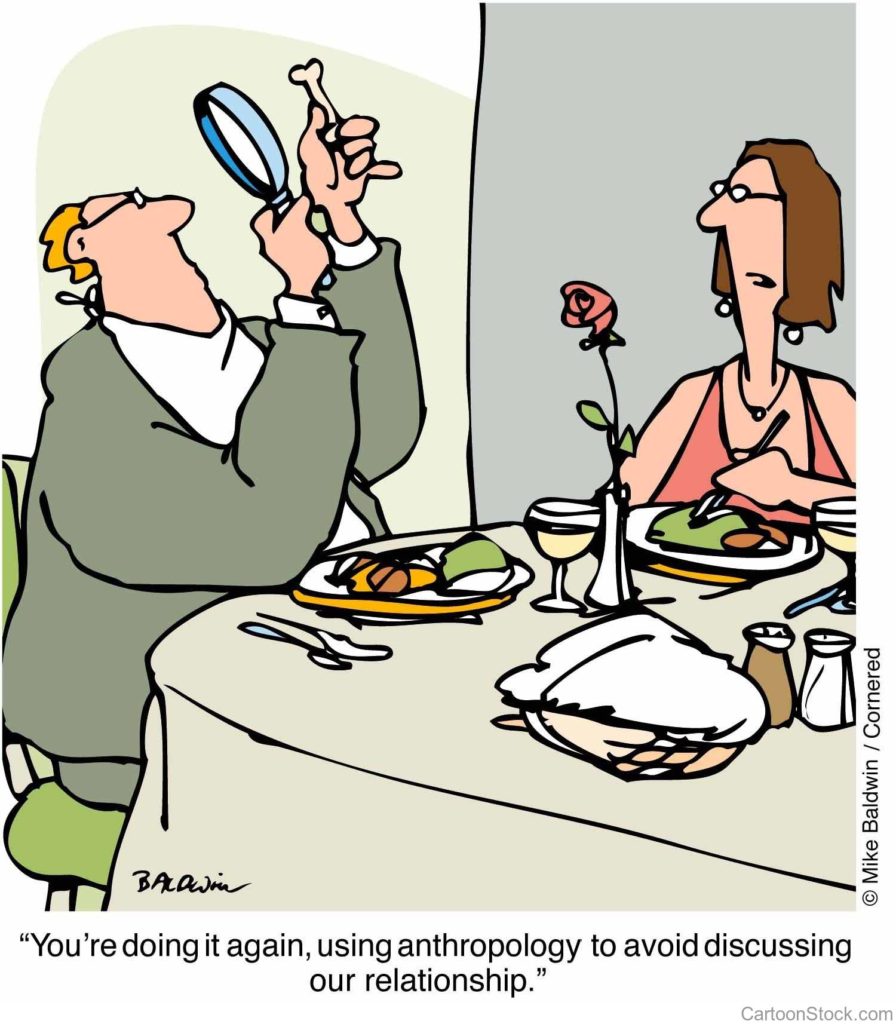 Observe and study experiences as an anthropologist would observe and study a ritualistic dance of a tribe in the Amazon.
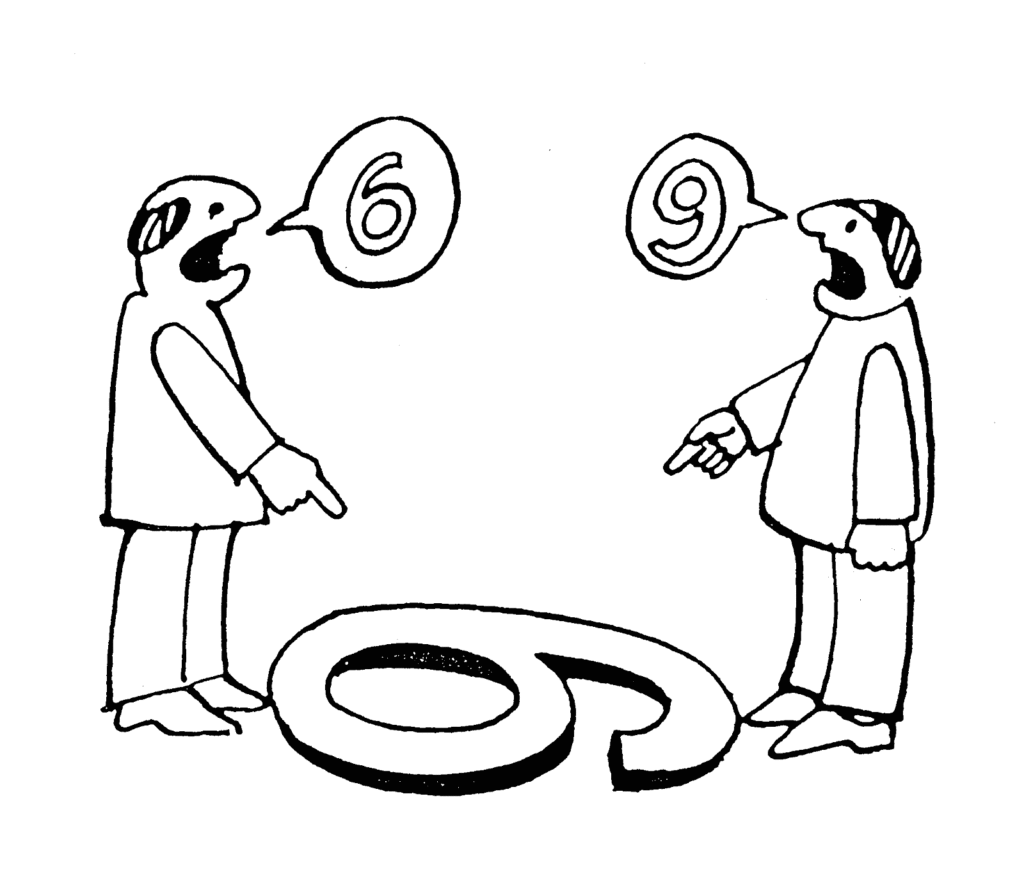 In my high school debate class we were taught to develop a sound argument for and against each proposition. Prior to a debate we didn’t know which side of the proposition we would be asked to defend so we had to be prepared to support either side. It taught us good debating technique and a good life skill.